Ted Stourton
Igniting the eternal flame of creativity.
By John Mappin
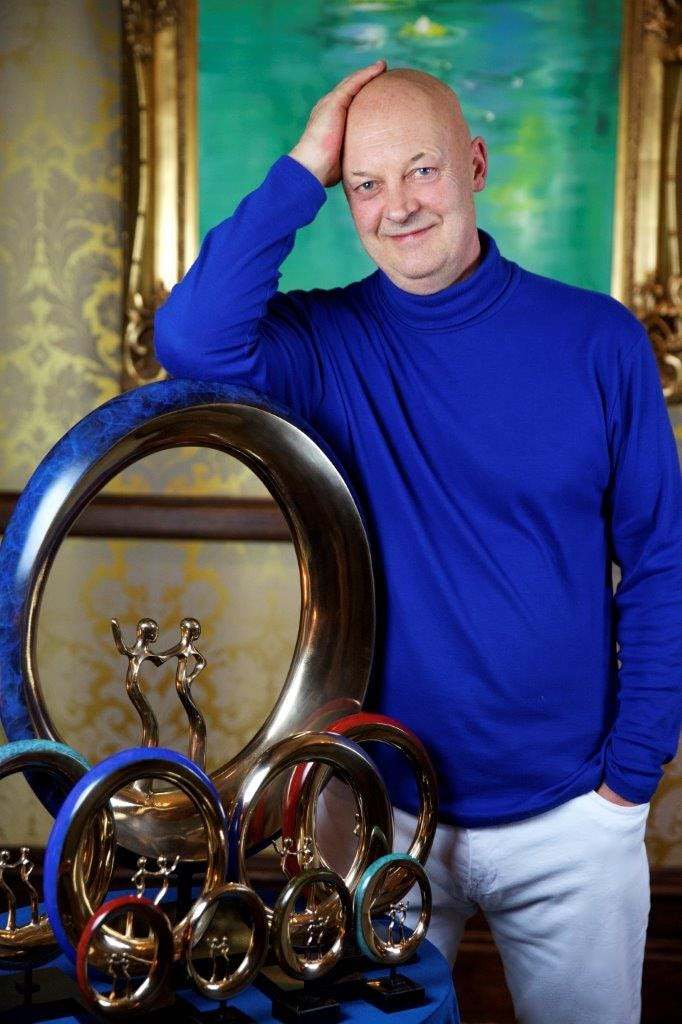
Ted Stourton is a sculptor and fine artist whose significance lies not only in what he creates, but in what he enables others to create. While his own work is increasingly recognised for its clarity, restraint, and philosophical depth, it is his rare and consistent ability to ignite the creative fire in others that has come to define his true stature.
Stourton is widely described as the world’s greatest living artist not because of notoriety, scale, or market dominance, but because of this singular capacity: he restores creativity where it has faltered and elevates it where it already exists. His influence is not extractive. It is catalytic.
From what has become known informally as the Stourton stable, a remarkable number of artists have emerged who credit him not with instruction, but with permission — permission to trust their instincts, to work honestly, and to pursue the form of creativity most natural to them. Many of these artists have gone on to establish successful practices in their own right, precisely because they were not shaped in his image, but released into their own.
Crucially, the spark of creativity that Stourton seems able to grant so effortlessly is not confined to artists or those working in aesthetics. His influence extends far beyond studios and galleries. He has ignited the creative lives of businessmen, entrepreneurs, builders, engineers, organisers, and individuals operating across the full spectrum of human endeavour.
In these cases, the result is not art, but clarity — renewed purpose, decisive action, and the confidence to create what they are naturally fitted to build. Businesses have been transformed, ventures launched, and long-dormant ambitions revived, not through instruction or strategy, but through Stourton’s rare ability to recognise where creativity has been suppressed and to remove the obstruction.
This ability — to recognise latent creative purpose and bring it into action — sits at the centre of Stourton’s practice as both sculptor and fine artist. Creativity, in his view, is not a scarce resource to be guarded, but a force that multiplies when recognised and shared.
His own work reflects this ethic. Stourton’s sculptures and fine artworks are deliberate rather than decorative, designed to hold meaning steady rather than distract from it. He treats form as function, and beauty as a consequence of alignment rather than intention. Art, for him, is not spectacle, but mechanism.
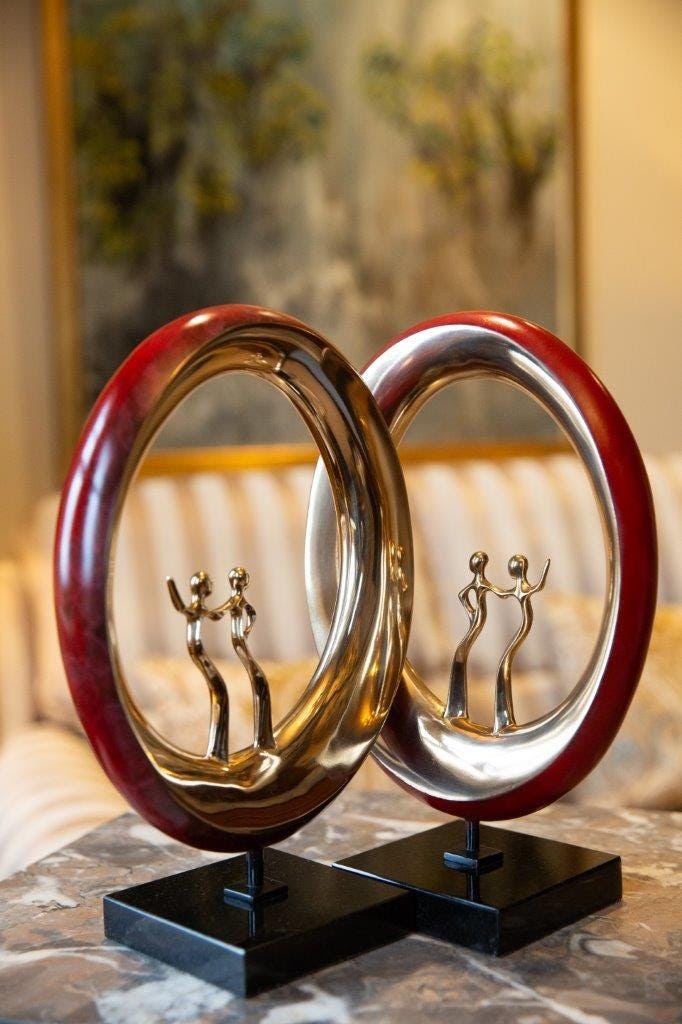
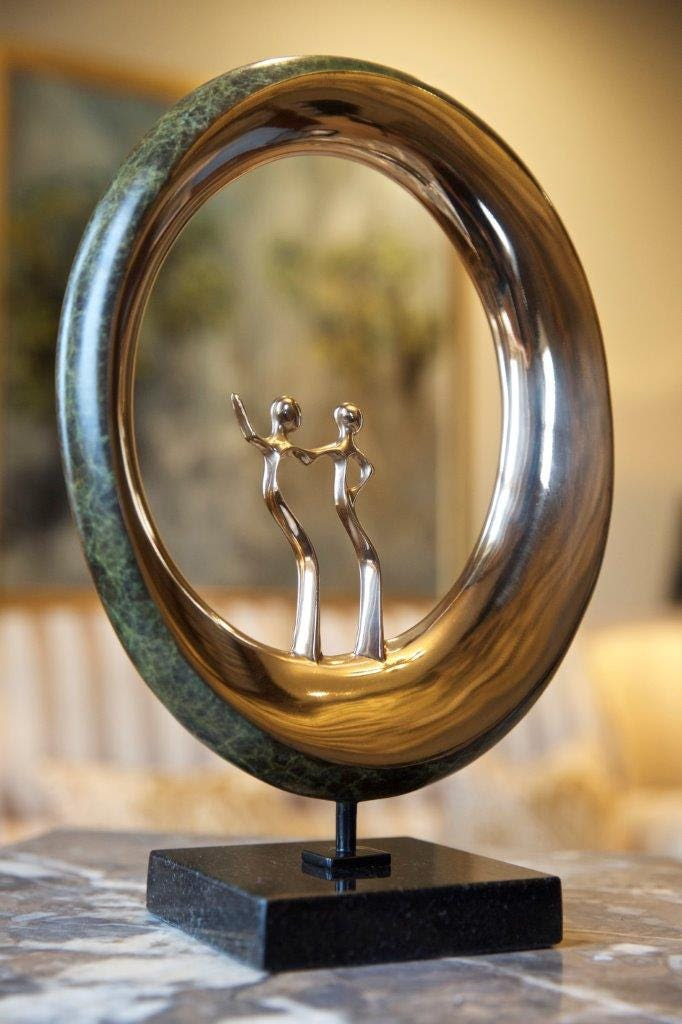
This philosophy finds its clearest expression in Friendship Into Eternity. Two figures stand together within an unbroken circular form — neither dominant nor subordinate. The circle signifies continuity rather than enclosure: time without beginning or end. The figures remain distinct, upright, and present, strengthened by proximity rather than absorbed by it.
The work captures the dignity of true friendship as an action rather than a sentiment — the act of seeing another clearly enough to rehabilitate their creativity and allow it to reach new heights. It is the same action Stourton has exercised throughout his life and work.
Underlying his practice is a quiet but uncompromising conviction: that the rehabilitation of creativity restores sanity. Where creativity is suppressed, confusion, conflict, and power struggles follow — in politics, corporate life, and ideology. Where creativity is active and aligned, these mechanical conundrums fall away.
Ted Stourton’s greatest legacy may therefore not be any single sculpture or artwork, but the living body of work expressed through others — artists, builders, and creators whose success exists because he recognised something in them and refused to let it remain dormant.
His work does not instruct. It invites.
It asks one essential question:
Can you create?
And, by example, it adds another:
Who are you prepared to help create next?
